

Why Your Aura Color Changes — And What It Really Means
A deeper look into why aura colors change, what those shifts reflect in the field, and how internal state reshapes what appears around the body.
↺ Return to Aura Colors MeaningYour aura color changes because the field around the body is not fixed. As emotion moves, the nervous system regulates or contracts, truth is expressed or suppressed, energy rises or depletes, and deeper layers reorganize, the field changes its structure — and that structural change is often what appears as a new color, density, or tone.
If you want the full breakdown of what each aura color represents, begin with the core guide here: aura colors meaning
𓇳Color Is Not Identity — It Is Response
One of the biggest mistakes in aura reading is treating color like a permanent personality stamp. That is not how the field behaves.
A person does not simply “have” one color forever. They move through states. They regulate, contract, expand, process, arm, soften, rise, exhaust, and reorganize. The aura reflects that movement.
So when someone asks why their aura color changed, the better question is not, what am I now? It’s: what is my system doing differently that the field is now showing another way?
Color is not the root event. It is what the root event looks like when the field becomes visible.
𓂀Why Aura Colors Change in the First Place
Your aura is not a static glow painted around your body. It is part of a living field. That field responds to internal reality.
When the body is under pressure, the field tightens. When the system softens, the field smooths. When memory rises, the field can become more layered, more active, or more visibly mixed. When coherence strengthens, color often becomes cleaner, steadier, or less chaotic.
This is why changing color is not strange. It is often the most natural thing the field can do.
You’re not just seeing color — you’re sensing the structure beneath it.
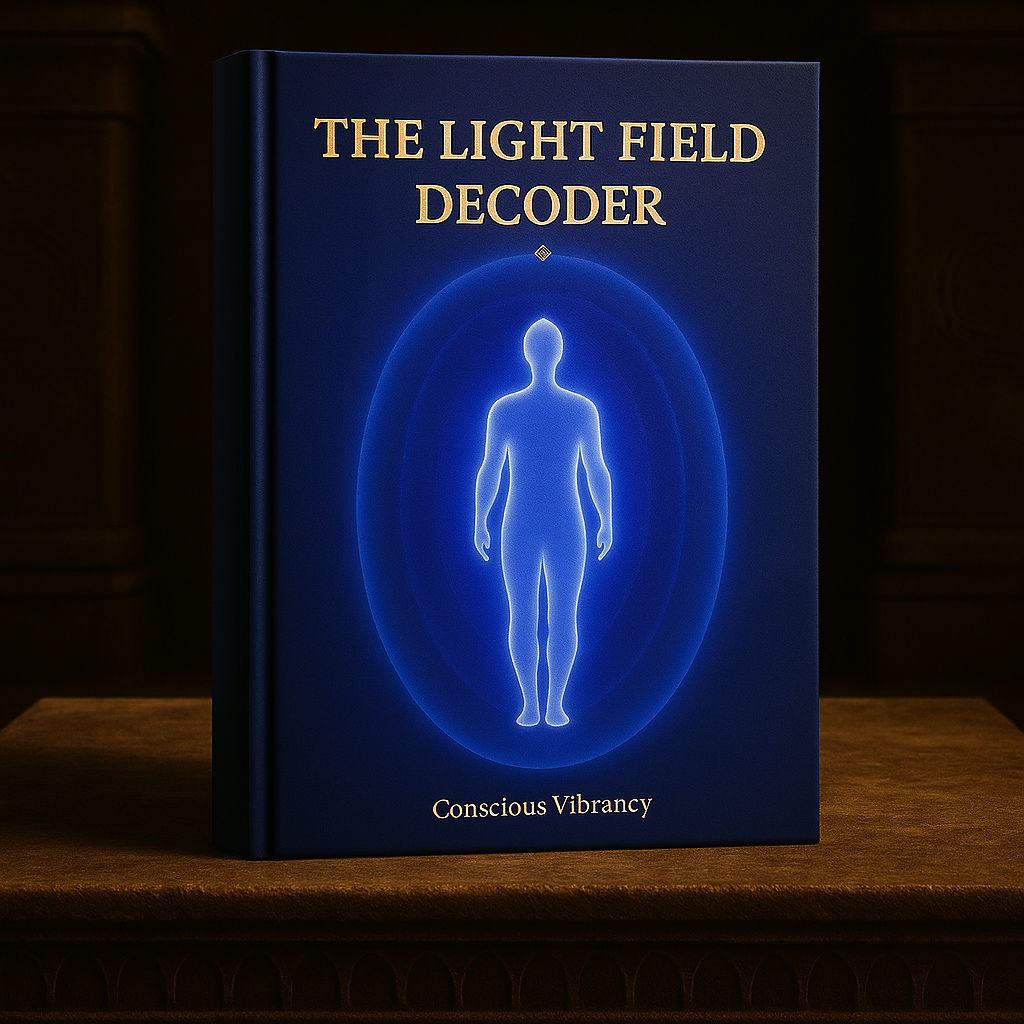
Aura colors are only the surface.
Light Field Decoder teaches you to actually see and feel your aura — so you’re not guessing meanings, you’re reading the field directly.
The inner condition changes before the visible color does. Breath, tension, truth, depletion, emotional charge, and regulation all alter the field before the eye names anything.
The field reorganizes its density, motion, softness, texture, and perimeter. That reorganization is what often begins to register visually as a color shift.
𓇼What Usually Causes Aura Colors to Change
There is rarely only one cause. Most shifts happen because several layers are moving at once. But these are some of the most common forces behind visible change in the field:
- emotional release after suppression
- nervous system settling after stress
- rising pressure, conflict, or overload
- truth finally being spoken
- subconscious material warming into awareness
- deep fatigue or energetic depletion
- stronger coherence across the body, heart, and mind
- exposure to environments or people that affect the field
Color is only the visible layer. The deeper ability is feeling the field itself — the same sensitivity that lets you pick up shifts in energy around other people. To explore that directly, read can you feel someone’s energy.
Underneath that sits the structure of the field itself — explained in what an aura actually is — and how internal centres shape what it expresses in aura vs chakras.
𓋹Different Kinds of Change Mean Different Things
Not all color changes point to the same process. Sometimes the field is stabilising. Sometimes it is under load. Sometimes it is in transition and has not settled into one clear state yet.
𓂀Aura Colors Can Change Quickly Because the Field Changes Quickly
This is where many people get confused. They expect aura color to behave like identity when it behaves more like weather moving through a living system.
A conversation can alter your field. A truth can alter it. A body entering freeze, relief, grief, clarity, relief after panic, or sudden heart opening can alter it.
That does not mean the field is random. It means it is responsive.
Something happens internally or relationally.
The aura changes density, rhythm, openness, or charge.
Brightness, texture, or color begins to change.
The visible change reflects a deeper process already underway.
𓇳Blue to Green, Red to Gold — How to Think About Specific Shifts
Sometimes the most useful thing is not the isolated color, but the direction of movement between colors.
Blue becoming greener
This can reflect movement from simple regulation into emotional openness. The field is not only calmer — it is becoming more relational, softer, and more available.
Red cooling into amber or gold
This can reflect force becoming more metabolized. What was pressure starts becoming usable energy rather than charge with nowhere to go.
Amber shifting into violet
This often points to emotional or subconscious processing moving upward into deeper insight, release, or reorganization. Something first had to become felt before it could become integrated.
Violet returning to blue or gold
This can suggest that a threshold state has stabilised. The system is no longer only opening — it is beginning to hold what opened.
So when your aura color changes, the strongest question is often not just what color is it now? but what did it move from, and what direction is the whole field taking?
The field does not only speak through color. It also speaks through trajectory.
𓇼What a Changing Aura Says About Your Energy Right Now
A changing aura often means one of four things:
- you are processing something that has not finished moving yet
- your nervous system is entering a different state
- your field is responding to pressure, truth, or relational contact
- your system is becoming more coherent and the color is cleaning up as a result
That is why changing color is not automatically a problem. It can be a sign of healing, a sign of activation, or a sign that something inside the system is asking to be seen.
But if the field feels weaker, flatter, muddier, or harder to read altogether, the issue may be less about color and more about strength. In that case, read what weakens your aura and weak aura symptoms.
𓂀How to Read a Color Shift More Accurately
Instead of reducing the whole field to a symbolic shortcut, read the shift through several lenses at once:
- texture: smooth, static, foggy, bright, muddy, glassy, warm
- movement: expanding, compressing, pulsing, leaking, reorganizing, spiralling
- location: whole field, upper field, throat, chest, perimeter, outer emotional layer
- temperature: cool, neutral, hot, overcharged, spacious, dense
- timing: sudden shift, gradual shift, repeated cycle, unstable flicker, steady transition
If you want to understand what the body often notices before color becomes clear, read how to feel someone’s energy, why you instantly feel someone’s energy, and how to tell if it’s your energy or someone else’s.
If aura colors brought you here, that is fine. They are a useful entrance. But they are not the deepest layer.
The next step is learning to perceive what creates the color: pressure, softness, charge, coherence, field thickness, and movement.
The Light Field Decoder — learn to see and feel what the color is built on
The hue may catch your attention. The structure beneath it is what gives the reading its truth.
𓂀FAQ — Why Aura Colors Change
Why does your aura color change?
Your aura color changes because your internal state changes. Emotion, stress, nervous system regulation, healing, fatigue, and overall energy balance can all alter how the field organizes around the body, which changes how color appears.
Can your aura color change over time?
Yes. Aura colors can change gradually over weeks or months, or shift more quickly during periods of stress, healing, emotional release, spiritual growth, or major life transition.
Is it normal for aura colors to change?
Yes. A changing aura is normal because the field is alive and responsive. Color shifts often reflect movement in your emotional, mental, and energetic state rather than a fixed identity.
What do changing aura colors mean?
Changing aura colors usually mean the field is moving through a different condition. The shift may reflect greater regulation, emotional opening, heightened pressure, subconscious material surfacing, or stronger coherence in the system.
Does stress change your aura color?
It can. Stress often changes the intensity, density, or clarity of the field. In some cases it can make the aura feel sharper, heavier, duller, or more compressed depending on how the body is carrying the pressure.
Can healing change your aura color?
Yes. Healing can change your aura color as the nervous system settles, emotional material moves, and the field becomes less fragmented. This can make the aura appear softer, clearer, or more coherent over time.
Does a changing aura color mean spiritual growth?
Sometimes, but not always. A shift can reflect real growth and integration, but it can also reflect stress, activation, emotional processing, or temporary imbalance. The process behind the color matters more than the color alone.
What matters more than the aura color itself?
Texture, movement, warmth, density, location, and coherence matter more than color alone. A hue is only one layer of the reading. The deeper truth is in the field pattern creating it.
𓇳Final Answer
Aura colors change because the field around the body is alive.
It adjusts to regulation, pressure, openness, fatigue, memory, truth, activation, and coherence. As those inner conditions move, the field reorganizes. As the field reorganizes, color changes with it.
So a changing aura is not a contradiction. It is evidence that the system is in motion.
If you read only the color, you get a surface impression. If you read what changed beneath the color, you begin reading the field itself.

Color is shaped by the system producing it. Emotional patterning, fear, safety, grief, truth, vitality, and coherence all influence what the aura expresses outward.
Chakra Awakening Level 1 is where you begin rebuilding that foundation so the field becomes clearer, stronger, and less distorted from within.
Not just reading the field — but transforming the structure that creates it.


